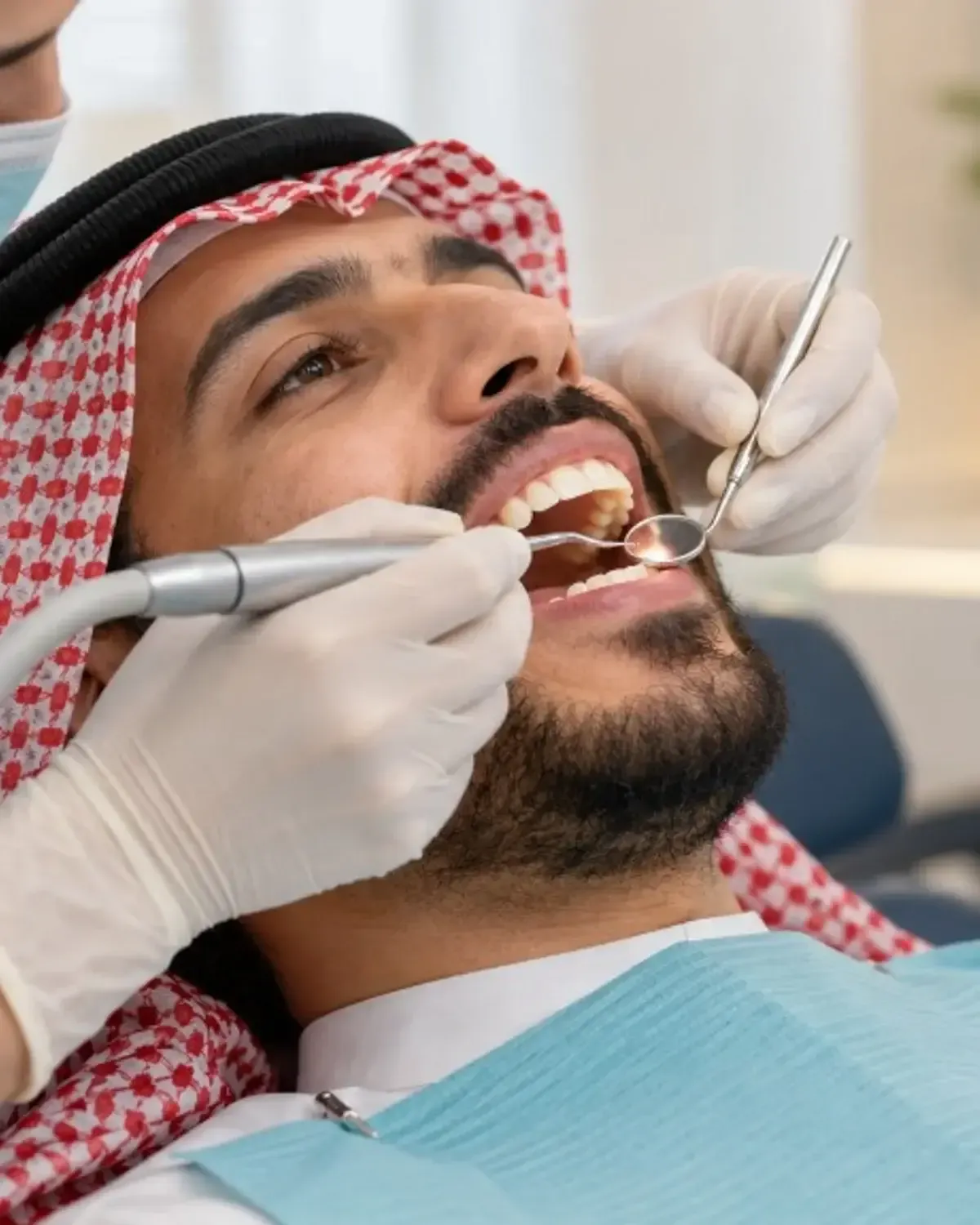



After a new tray
Pressure for a few days, then it eases for most people
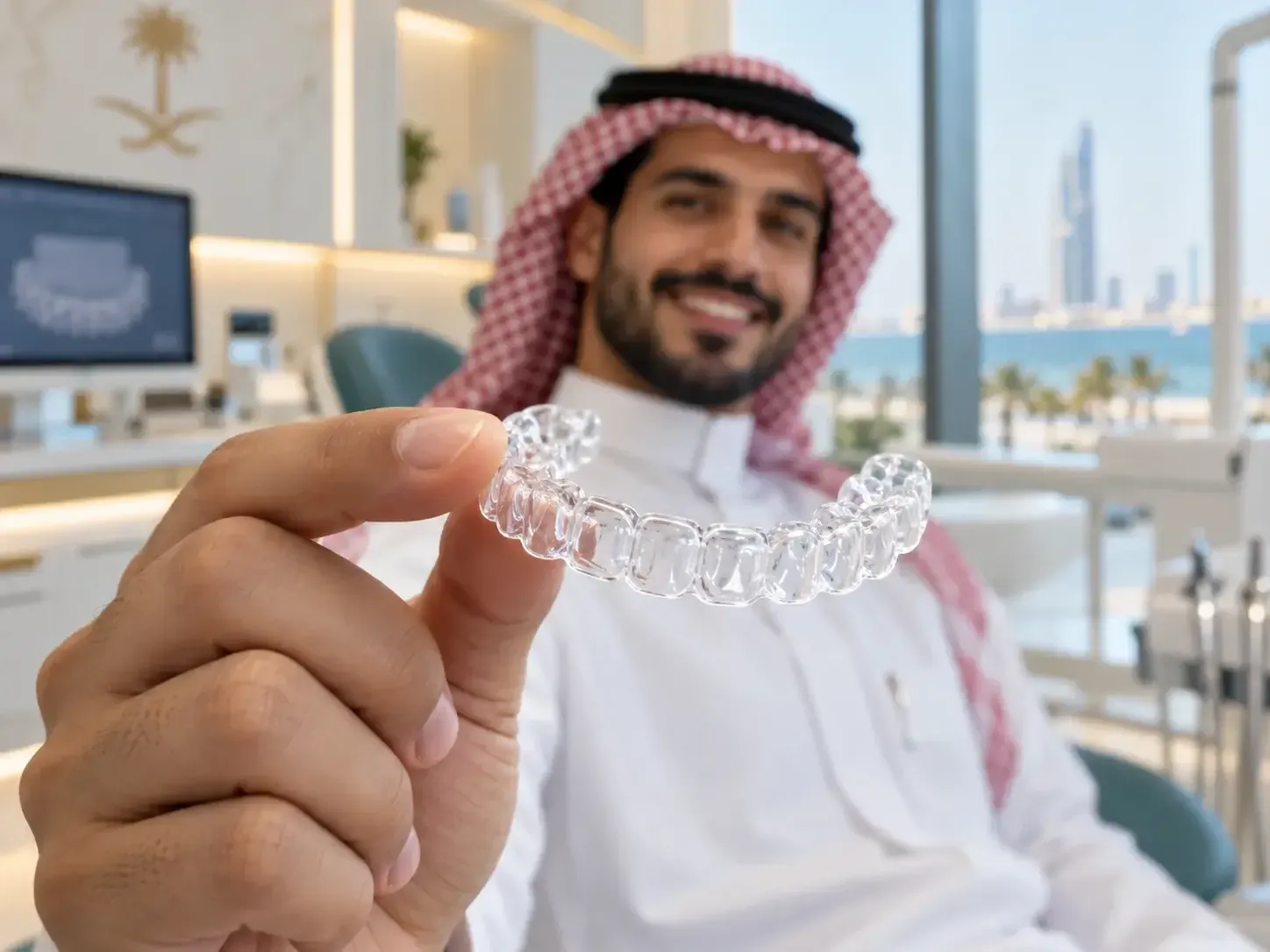
Clear aligners are clear plastic trays that move the teeth in small steps at Smile Makers in Jeddah. You wear them most of the day and take them out to eat and to brush. How long the plan takes depends on the tooth movement and on how steadily you wear the trays, and the result differs from person to person.
After a new tray
Pressure for a few days, then it eases for most people
Plan length
It can run for several months, depending on movement and wear, with no single length for every mouth
Tabby
Instalments can be requested. Tabby decides the application
Clear aligners are a series of clear plastic trays. Each tray moves the teeth a short distance past the tray before it. At Smile Makers in Jeddah we look at the teeth, the gums, and the bite, and we agree on the direction before we talk about timing.
People ask about clear aligners in Jeddah because wires would show in wedding photos, or because they want the appliance out at lunch during a workday. The trays are discreet. The hours you actually wear them are what move the teeth. A tray asleep in its case does not move anything.
This is a different job from metal braces that stay on through meals. It is a different job from a shell that changes color and shape without moving the tooth. If a tooth is tipped, moving it can spare a wide enamel reduction later. If the teeth already line up and the complaint is color, whitening or a Hollywood smile is the closer conversation.
We do not put a product name on a public page. A trade name is not the same thing as your plan.
They fit mild or moderate crowding, and small spaces, when the gums are quiet and the bone around the roots is sound. They can also fit light crowding that came back after older braces, when the movement needed is limited. Photos and x-rays decide that. A single smiling photo in a message is not an exam.
Swollen or bleeding gums wait. Moving teeth through inflammation can increase bleeding and gum recession. We treat the gums, then come back to trays.
Open decay under a tray worn most of the day is a poor start. Sugar trapped on the enamel turns into a white spot, then a cavity, faster than it would in open air.
A jaw that needs surgery, an impacted tooth, or a bite the trays cannot address is said plainly at the consultation. Metal braces may be the calmer plan for those cases. If something hurts, that is handled before any cosmetic movement. We do not write one shape for every face.
Primary teeth belong on the children's dentistry page. A teenager can be discussed when the permanent teeth are in place and wearing trays at school is realistic. Starting a new plan during pregnancy is discussed at the visit, especially if x-rays are needed.
The familiar instruction is to keep the tray in most of the day. You take it out to eat, brush, and floss, then put it back. The hour count the clinic writes on your sheet is not stated here as a promise.
Shorter wear slows the movement, and the next tray may not seat. Travel days and exam weeks still sit inside the plan. Tell us if you missed several days in a row. We may keep the current tray or step back to the previous one.
Speech can feel odd for the first day or two. The tongue meets an edge that was not there. That eases for most people as they adapt. If a lisp stays, bring the tray in so we can see whether an edge needs polishing.
A tray loose in a pocket bends. The case is part of wearing them. On a long Jeddah workday, carry a small brush.
If you cannot brush, rinse before the tray goes back in. Brushing is still the real clean.
There is no single number for every mouth. Published descriptions sometimes speak of a span of several months, and the plan can run longer when the teeth have farther to travel or when wear stops for days at a time. The duration the clinic states is written in your plan after the exam.
You change trays on a written schedule. Many publications describe a short gap between one tray and the next. Yours may be slower or quicker. We do not fix one gap for every person on this page.
A wedding date or a flight does not shrink the distance a tooth has to move through the bone, even when the date is close and you want the photos. If the date is soon, we say what can change before it and what has to wait. Someone else's photo is not a timetable for your plan.
We count the teeth to be moved, look at the gums, and take photos with your teeth together and with you smiling. X-rays are taken if we need root length or the bone around a tooth. A phone photo helps the conversation. It misses crowding the cheek and the lip hide.
You see the direction of movement before anything is made. The screen is a direction. It is not the result you will live with. We agree which teeth are in the plan and which teeth stay where they are.
Small tooth-colored resin bumps may be bonded so the tray can grip. A bump can fall off. Do not glue it with a household adhesive. Bring it with you if you still have it.
Sometimes a very small amount of enamel is polished between two teeth to make space. We explain that before enamel is touched. Sometimes elastics between the jaws correct the bite. If your plan does not include them, we do not add them halfway through without a conversation.
Take the trays out before you eat, because chewing on them can crack an edge. You can drink cool water with the trays in. Coffee and tea wait until the trays are out, and so do juice and fizzy drinks. Brush or rinse before the trays go back.
Sugar under a tray for hours is a short path to a white spot and then a cavity. That happens even when the tray looks clean from the outside. After lunch at work, rinse and seat the tray if brushing is hard. Brush at the next chance.
Floss still matters. The tray does not clean between the teeth.
Clean the tray with cool water and a soft brush. Hot water warps the plastic, so the tray grips in the wrong place. A gritty toothpaste scratches it cloudy.
A tray left on a dashboard in Jeddah sun warps the same way hot water does. Do not leave it there.
If a tray cracks, wear the previous one if it is intact, and message us. Do not jump to a later tray the same day without being seen.
Teeth drift toward their old positions if nothing holds them. The retainer is part of the plan. It may be a night tray, a thin wire behind the front teeth, or both. The type, and how long you wear it, is written in your plan.
Extra trays are sometimes needed if a tooth stops short or a small space opens. We decide that from new photos. We do not judge the plan from one message.
If a retainer wire breaks later, call soon. The loose end annoys the tongue, and a tooth can shift within weeks.
Once the teeth are straighter, a color or an edge may still bother you. A cleaning removes tartar that collected around the trays. Whitening can lift enamel when the gums are quiet.
A Hollywood smile comes up only if you want shape and color changed together. We wait until the gums are calm before any shell. A shell on gums rubbed raw by rushed brushing leaves a red margin.
If there is a written warranty, it has conditions, including wear and checkups. The number of years is not on this page.
A new tray can bring pressure, or make an apple hard to bite, for a few days. Then it eases. Pressure means the tray is touching the tooth. A throbbing tooth, swelling, or an unfamiliar taste is a reason to write to us.
Name the tooth. Do not cover it with a painkiller and skip the visit.
An edge can scratch the cheek at the start. Tell us, and we can polish it. Do not cut the plastic with household scissors, because the cut can remove the point that is supposed to push the tooth. If a resin bump falls off, keep it in the case when you can find it.
Some people feel a mild headache on the first day of a new tray, then it fades. A severe headache, or pain in the ear, means we should see you. Do not keep wearing a tray that sits high off the teeth. A tray that does not seat needs a look, and it should not be forced on.
The price of clear aligners is not on this page. An offer, if there is one, lives on the offers page only. The fee changes with how hard the movement is and with the number of trays. Gum care or fillings before you start, the retainer, and an extra round of trays are added when they are needed.
In the chair, ask what the figure includes, whether the retainer is inside it, and what is billed alone if you need an urgent visit. Two photos in an ad are not a quote. The exam sets the boundaries.
Decay treated before the trays may be a separate fee. That protects the tooth under the plastic. Leaving a cavity until the middle of the plan makes treatment harder while you are still wearing trays.
You can ask to split the plan with Tabby. Approval is not the clinic's decision. Tabby reviews the application and may approve it, approve part of it, or decline it. Instalments do not change the number of trays or the direction of movement.
If the application is declined, you and reception agree how to pay, or you delay the start when nothing hurts. Decay or gum inflammation, if it is there, is not put off because instalments were declined.
Book with your name, mobile number, and clear aligners. You do not pick a clock time on the site. Reception calls during opening hours.
The clinic WhatsApp is 055 117 0327. Bring a written question if you like: wear hours, what happens if you travel, and what follows the last tray.
A dentist at the clinic reviewed this page. Last updated: October 22, 2026.
01
We look at the teeth, gums, and bite, and take photos and x-rays if we need to see the roots.
02
We agree on the direction of movement and which teeth are in the plan before the trays are made.
03
We bond small resin bumps if they are needed, and explain any light enamel polishing before we do it.
04
You receive the trays and the wear instructions, and you start with the first tray.
05
We check that the trays seat, plan the retainer after the last tray, and see you if a tray breaks.
You can ask Tabby about instalments. Approval comes from Tabby.
A shell can last for years if the edge stays sealed and the gums stay calm. There is no single lifespan for every mouth. Ice, grinding, and using teeth as tools can shorten it. Come back if a corner chips.
Not always. A figure for one fixture may omit the crown, grafting, imaging, or a temporary. Ask for the full plan items for your case.
Opening hours are published on the site: typically 9:00 a.m. to 10:00 p.m., and Friday from 4:00 p.m. We are not advertising “24 hours” on this page. For general medical emergencies outside hours, go to the right service, and contact us at the next opening for dental follow-up.
No. It usually means the edge is inflamed. Extra force harms. Soft and regular beats hard and rare.
Last reviewed